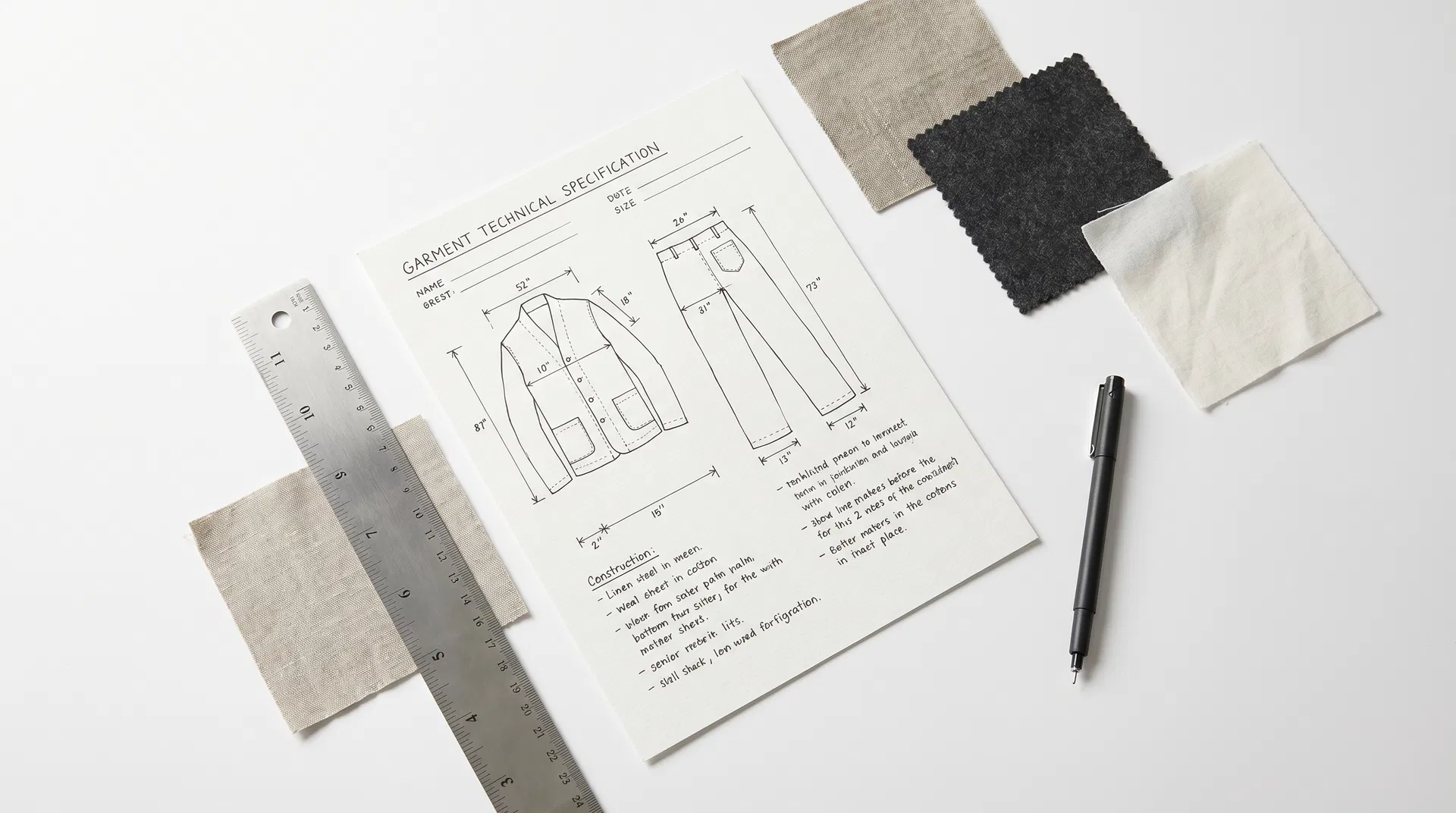
How to Read a Tech Pack: A Beginner's Guide for Apparel Buyers
How to Read a Tech Pack: A Beginner's Guide for Apparel Buyers In apparel sourcing, a tech pack is the blueprint that transforms your design concept into a finished garment. For buyers, understanding how to read a tech pack is crucial for clear communication with factories, minimizing production er
How to Read a Tech Pack: A Beginner's Guide for Apparel Buyers
In apparel sourcing, a tech pack is the blueprint that transforms your design concept into a finished garment. For buyers, understanding how to read a tech pack is crucial for clear communication with factories, minimizing production errors, and controlling costs. This guide breaks down the essential components of a tech pack and offers practical tips to help you interpret and evaluate them confidently.
What Is a Tech Pack and Why Does It Matter?
A tech pack (technical package) is a comprehensive document that contains all the specifications, details, and instructions a factory needs to produce your apparel item exactly as intended. It typically accompanies your design sketches and fabric selections.
Without a clear tech pack, manufacturers rely on guesswork or assumptions, which can lead to quality issues, delays, and increased costs. As a buyer, your ability to read and verify a tech pack directly impacts the success of your sourcing process.
Key Components of a Tech Pack
A standard tech pack includes several sections that cover the garment from design to construction to finishing. Here are the primary elements you should expect:
| Tech Pack Section | What It Contains | Why It’s Important |
|---|---|---|
| Cover Page | Style name/number, season, brand info, sketches | Quick reference and identification |
| Technical Sketches | Flat drawings showing front, back, and details | Visual representation of the garment design |
| Bill of Materials (BOM) | List of fabrics, trims, labels, and components | Ensures correct materials are sourced |
| Construction Details | Sewing instructions, stitch types, seam allowances | Guides factory on how to assemble the garment |
| Measurements & Size Specs | Detailed measurement charts per size | Ensures correct fit and sizing consistency |
| Label & Packaging Info | Placement and type of labels, hangtags, packaging instructions | Helps maintain brand identity and compliance |
| Colorways & Pantone References | Exact colors with Pantone codes | Prevents color mismatches |
| Additional Notes | Special instructions, quality standards, testing requirements | Clarifies unique considerations |
How to Read Each Section Effectively
1. Cover Page and Technical Sketches
Start with the cover page to confirm you have the correct style and season. Review the technical sketches carefully — these are your visual blueprint.
- Look for: Clear, accurate flat sketches showing all garment views.
- Check: Details like pocket placement, collar type, closures, and stitch lines.
- Tip: If you see inconsistencies or missing views, ask the supplier to clarify or provide updated sketches.
2. Bill of Materials (BOM)
The BOM lists every material the factory will use.
- Review: Fabric types, weights, fiber content, trims (buttons, zippers), and labels.
- Verify: Materials match your approved samples or specifications.
- Tip: Ensure all components have exact supplier names or codes to avoid substitutions.
3. Construction Details
This section explains how the garment should be made.
- Look for: Sewing techniques, stitch types (lockstitch, overlock), seam allowances, and reinforcement points.
- Check: If these instructions align with your quality expectations and garment function.
- Tip: Inquire about any unfamiliar terms or techniques; these affect durability and costs.
4. Measurements & Size Specs
A detailed spec sheet provides measurements for each size.
- Focus on: Key dimensions like chest, waist, length, sleeve, and shoulder width.
- Compare: Against your size standards or previous successful styles.
- Tip: Watch for tolerance ranges (acceptable variation) and understand how they impact fit consistency.
5. Label & Packaging Instructions
Labels and packaging maintain brand consistency and compliance.
- Confirm: Label sizes, placements, and materials.
- Review: Packaging requirements to ensure protection during shipping.
- Tip: Missing or vague instructions here can lead to rework or customs issues.
6. Colorways & Pantone References
Color accuracy is critical in branding.
- Verify: Pantone colors match your brand palette.
- Ensure: Dye lots and fabric swatches correspond to these references.
- Tip: Ask for physical color samples when possible.
7. Additional Notes
Always read any extra instructions or quality requirements.
- Examples: Washing instructions, testing standards (e.g., colorfastness), or environmental certifications.
- Tip: These notes can prevent costly misunderstandings.
Practical Tips for Buyers: What to Do When Reading Tech Packs
- Cross-Check All Sections: Don’t rely on one part of the tech pack. Confirm consistency across sketches, BOM, and specs.
- Use a Checklist: Create a checklist to verify each section is complete and accurate before sending to factories.
- Request Clarifications: If anything is unclear or missing, ask your supplier or designer immediately.
- Compare Against Samples: Use physical samples or prototypes to validate the tech pack details.
- Understand Industry Terminology: Familiarize yourself with sewing and fabric terms to avoid misinterpretation.
- Track Revisions: Tech packs evolve. Keep versions organized and communicate changes clearly.
Common Tech Pack Issues to Watch For
| Issue | Impact | How to Address |
|---|---|---|
| Missing or unclear measurements | Poor fit, customer returns | Insist on complete, precise spec sheets |
| Vague construction details | Quality inconsistencies | Request detailed sewing instructions and photos |
| Incomplete BOM | Material substitutions or shortages | Verify all trims and fabrics with exact specs |
| Incorrect color codes | Off-brand colors or re-dyeing | Confirm Pantone references and obtain swatches |
| Lack of packaging instructions | Damage during shipping or branding issues | Include detailed packaging specs in the tech pack |
Conclusion
Reading a tech pack is a fundamental skill for apparel buyers to ensure your product meets design intent, quality standards, and delivery timelines. By understanding each section and knowing what to look for, you can reduce errors, control costs, and build stronger relationships with your manufacturing partners.
Ready to source smarter? Book a consultation with a Loomlink sourcing expert.