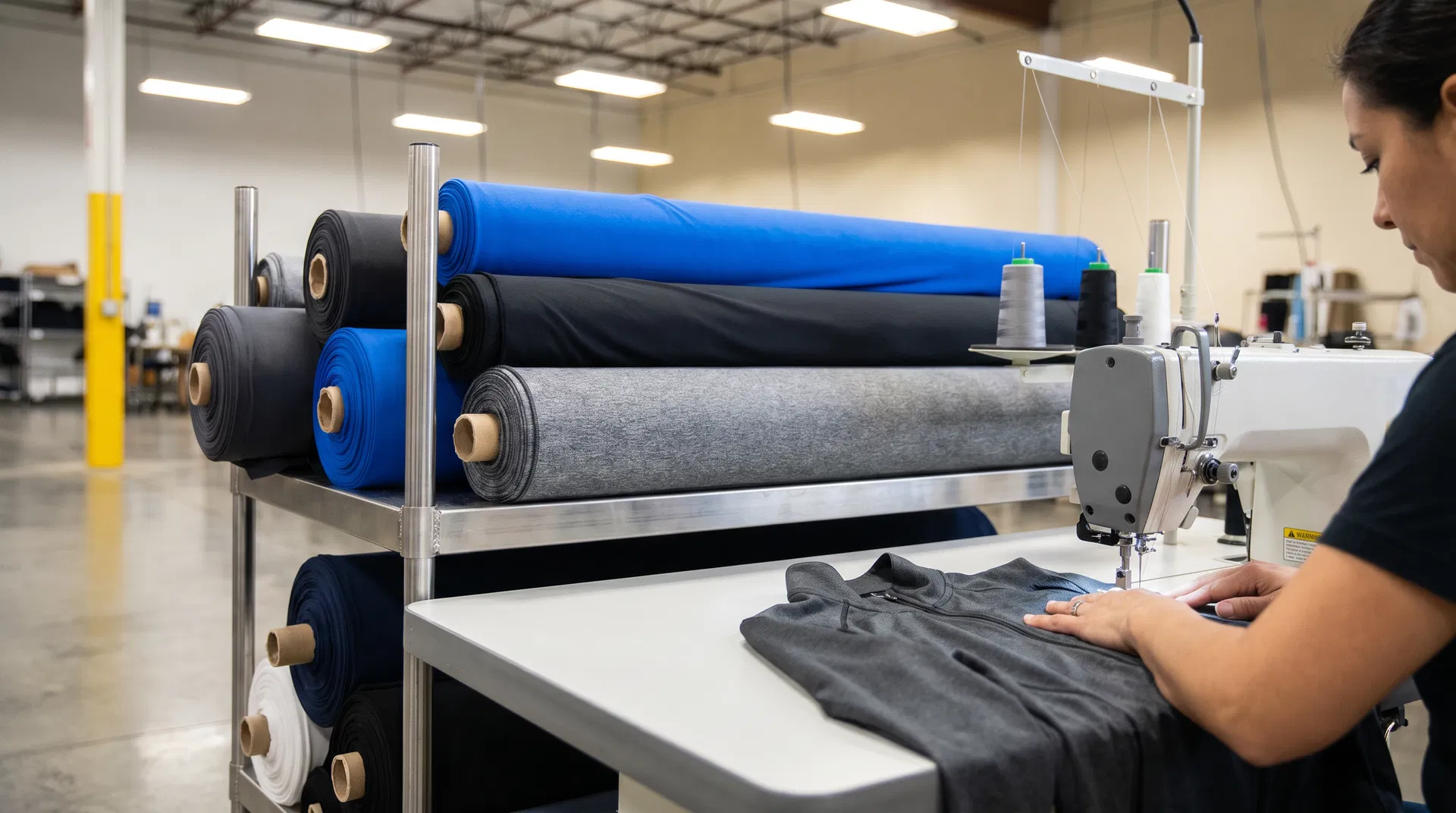
Sourcing Activewear: Fabrics, MOQs, and Factory Requirements
Activewear is one of the most technically demanding categories in apparel manufacturing. Fabric selection, construction, and factory capability all need to align precisely. This guide covers what brands need to know before sourcing their first activewear collection.
Sourcing Activewear: Fabrics, MOQs, and Factory Requirements
Activewear is one of the most technically demanding categories in apparel manufacturing. Unlike a basic T-shirt, a performance legging or sports bra requires precise fabric engineering, construction expertise, and quality control processes that not every factory can deliver. Brands entering this category — or scaling an existing line — need to understand the specific requirements before selecting a factory partner.
The Fabric Foundation
Activewear performance begins with fabric selection. The wrong fabric choice will result in garments that fail in wear testing, return at high rates, or simply feel wrong to the end consumer.
Core Fabric Types
Nylon/Spandex blends (78/22 or 80/20) are the standard for premium leggings, shorts, and sports bras. Nylon offers superior durability, colour retention, and a smooth hand feel compared to polyester. The 22% spandex content provides four-way stretch and recovery. This construction is more expensive than polyester alternatives but delivers noticeably better performance.
Polyester/Spandex blends (88/12 or 87/13) are the workhorse of the activewear market. More affordable than nylon, polyester blends are widely used for gym wear, yoga pants, and casual athleisure. The trade-off is slightly lower durability and a tendency to pill over time with heavy use.
Recycled polyester (rPET) is increasingly requested by brands with sustainability positioning. Made from recycled PET bottles, rPET performs comparably to virgin polyester at a modest cost premium. Factories need to be able to provide chain-of-custody documentation if you plan to make sustainability claims.
Moisture-wicking and quick-dry finishes are applied to the fabric surface rather than built into the fibre. These finishes degrade over time with washing, which is an important consideration for performance claims.
| Fabric | Best For | Price Point | Key Consideration |
|---|---|---|---|
| Nylon/Spandex | Premium leggings, sports bras | Higher | Superior durability and hand feel |
| Polyester/Spandex | Gym wear, athleisure | Mid | Good value, slight pilling risk |
| rPET | Sustainability-positioned lines | Mid-High | Requires documentation for claims |
| Cotton/Spandex | Casual athleisure, yoga | Mid | Not suitable for high-sweat activities |
Fabric Weight
Fabric weight (measured in grams per square metre, or GSM) affects both performance and feel. For reference:
- 180–200 GSM — lightweight, suitable for running shorts and summer training wear
- 200–230 GSM — mid-weight, the most versatile range for leggings and sports bras
- 230–280 GSM — heavier weight, suitable for compression garments and colder-weather training
Construction Requirements
Activewear construction is more complex than basic cut-and-sew. The following construction elements require specific factory capability.
Flatlock seaming is the standard for activewear. Unlike an overlock seam, a flatlock seam lies flat against the skin, eliminating chafing during high-movement activities. Not all factories have flatlock machines — this is a key capability to verify during factory selection.
Bonded seams are used in premium performance garments where even a flatlock seam would cause irritation. Bonded seams use heat-activated adhesive tape instead of thread, creating a completely smooth interior. This requires specialised equipment and adds cost.
Gusset construction in leggings and shorts affects both comfort and durability. A properly constructed diamond gusset allows full range of motion and prevents seam stress during exercise. Factories with strong activewear programs will have standardised gusset patterns.
Waistband construction is a common quality failure point. A waistband that rolls, folds, or loses its shape after washing indicates either a fabric issue (insufficient spandex recovery) or a construction issue (incorrect attachment method). Request wear testing on waistband samples before approving bulk production.
Factory Requirements
Not every factory that produces apparel can produce activewear to a performance standard. When evaluating factory partners for activewear, verify the following:
Equipment: Flatlock machines, circular knitting machines (if producing their own fabric), and heat transfer equipment for labels and prints. Ask specifically about their flatlock machine count and capacity.
Fabric sourcing capability: The best activewear factories either produce their own fabric or have established relationships with performance fabric mills. A factory that sources fabric ad hoc from spot markets will have inconsistent quality across production runs.
Sample capability: Activewear sampling is more iterative than basics. Expect 2–4 rounds of fit and wear testing before a sample is approved. Factories with a dedicated sampling team and in-house pattern makers will move faster.
Quality control process: Ask specifically about their stretch and recovery testing, seam strength testing, and wash testing protocols. A factory that cannot describe their QC process for activewear specifically is not the right partner.
MOQs for Activewear
Activewear MOQs are typically higher than basics, reflecting the fabric minimums and machine setup costs.
- Standard MOQ: 500–1,000 units per style per colour
- Fabric minimum: Performance fabric mills typically require 200–500 kg per colour, which translates to approximately 500–800 garments depending on the style
- Print and sublimation: All-over sublimation printing requires a minimum of 300–500 units per colourway to be cost-effective
For brands launching with smaller quantities, options include working with a sourcing partner who can consolidate orders, selecting styles that use in-stock fabrics (avoiding custom colour development), or limiting the initial range to 2–3 styles in 1–2 colourways.
Key Sourcing Countries for Activewear
Indonesia is the strongest activewear manufacturing destination in Asia. The country has a deep sportswear ecosystem, with fabric mills, trim suppliers, and factories that have been producing for global performance brands for decades. Indonesia is the recommended first choice for premium activewear.
Bangladesh has a growing activewear capability, particularly for polyester/spandex basics and athleisure. Pricing is competitive, and the certification infrastructure is strong. Best suited for mid-market activewear rather than premium performance.
Vietnam is strong for technical outerwear and woven performance garments. Less dominant in knit activewear than Indonesia or Bangladesh.
China offers the broadest technical capability, including complex constructions, bonded seams, and specialty fabrics. Best for technically demanding styles or small-run sampling.
Working with loomlink for Activewear
loomlink's activewear network is concentrated in Indonesia and Bangladesh, covering the full range from premium nylon/spandex leggings to polyester athleisure basics. We manage fabric sourcing, sample development, and production oversight — so your team does not need activewear manufacturing expertise in-house.
Request a quote with your style details, fabric preferences, and target quantities to receive a factory recommendation and indicative pricing.