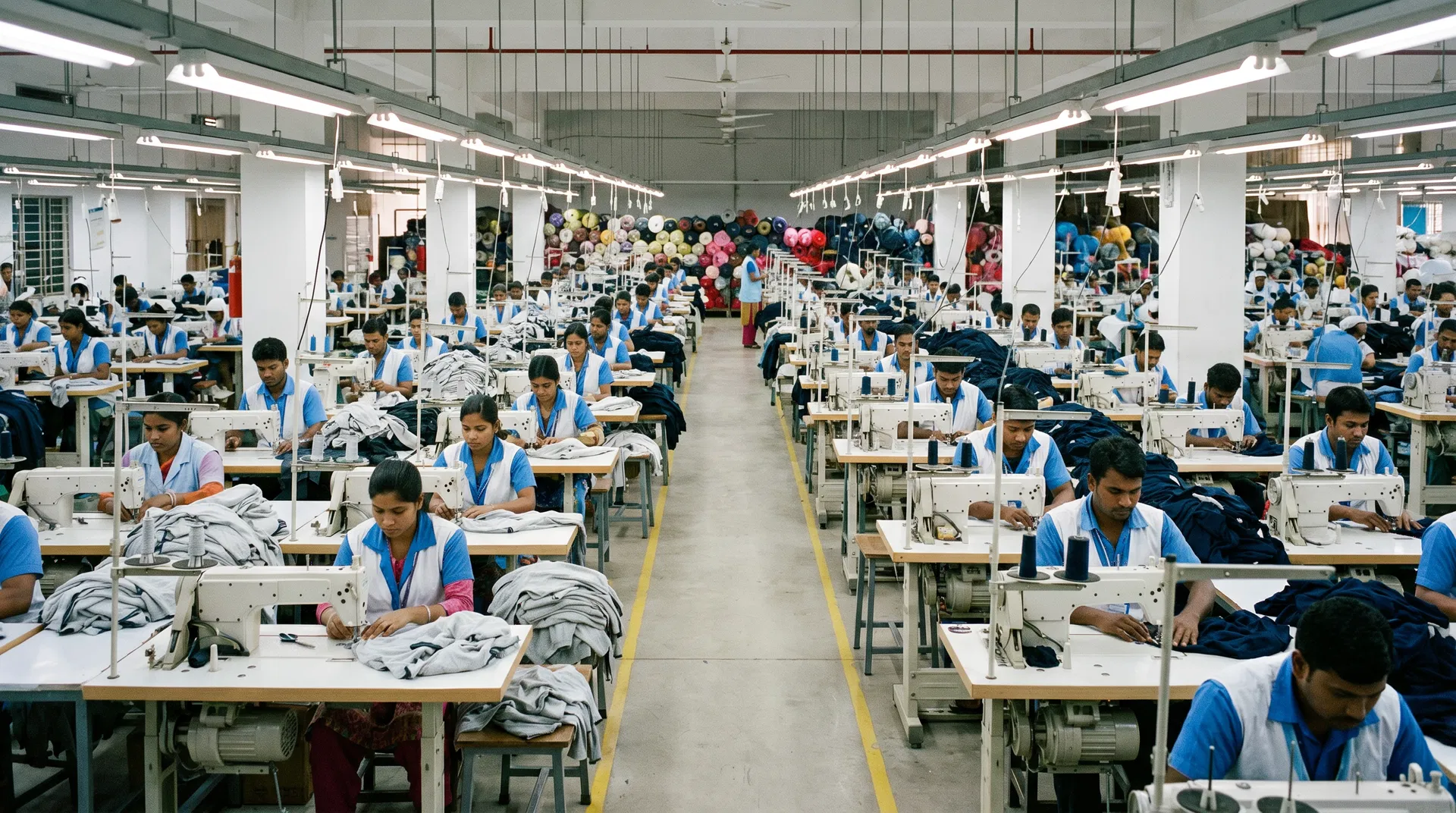
Sourcing from Bangladesh: What Every Apparel Brand Needs to Know
Bangladesh is the world's second-largest apparel exporter — but working with Bangladeshi factories requires understanding the country's strengths, limitations, and compliance landscape. This guide covers everything a brand needs to know before placing an order.
Sourcing from Bangladesh: What Every Apparel Brand Needs to Know
Bangladesh is the world's second-largest apparel exporter, behind only China. For brands sourcing knitwear, T-shirts, activewear, and basics at scale, it represents one of the most competitive manufacturing environments on the planet. But working with Bangladeshi factories effectively requires understanding the country's specific strengths, structural limitations, and compliance landscape.
Why Bangladesh?
Bangladesh's competitive advantage is built on three pillars: labour cost, scale, and a mature knitwear ecosystem. The country has over 4,000 export-oriented garment factories, a deep base of fabric mills, and a workforce that has been producing garments for global brands for four decades.
For buyers, this translates to:
- Competitive unit pricing on high-volume basics and knitwear
- Vertically integrated supply chains for cotton jersey, fleece, and interlock fabrics
- Strong certification infrastructure — BSCI, WRAP, GOTS, and OEKO-TEX are widely held
- EU trade preferences under the Everything But Arms (EBA) arrangement, which allows duty-free access for Bangladeshi goods into EU markets
What Bangladesh Makes Best
Bangladesh's manufacturing strength is concentrated in specific product categories. Brands that align their sourcing strategy with these strengths will get the best combination of price, quality, and lead time.
| Category | Bangladesh Strength |
|---|---|
| Jersey T-shirts & tops | Excellent — deep fabric base, competitive pricing |
| Fleece & sweatshirts | Excellent — vertically integrated fleece mills |
| Activewear & athleisure | Strong — growing technical fabric capability |
| Polo shirts & basics | Excellent — high volume, consistent quality |
| Woven bottoms | Moderate — capability exists but Vietnam is stronger |
| Outerwear | Limited — complex constructions better suited to China or Vietnam |
| Denim | Limited — Pakistan and Vietnam are stronger |
The Compliance Landscape
The Rana Plaza collapse in 2013 fundamentally changed how global brands approach factory compliance in Bangladesh. The Accord on Fire and Building Safety (now the International Accord) and the Alliance for Bangladesh Worker Safety drove significant investment in structural safety, fire safety, and electrical systems across thousands of factories.
Today, Bangladesh has one of the most scrutinised compliance environments in the world. Factories working with major international brands are typically subject to:
- Annual third-party social audits (BSCI, SMETA, or equivalent)
- Structural and fire safety inspections under the International Accord
- Chemical compliance testing for OEKO-TEX or REACH
- Worker welfare programs and grievance mechanisms
For buyers, this means that factories in the mid-to-upper tier of the Bangladeshi market are often better documented and more thoroughly audited than factories in countries with less scrutiny.
Minimum Order Quantities
MOQs in Bangladesh are generally higher than in some other sourcing countries, reflecting the factory structure — most facilities are optimised for high-volume production runs.
- Standard MOQ: 1,000–3,000 units per style per colour for most knitwear
- Fleece and activewear: 1,500–3,000 units per style per colour
- Fabric minimums: Cotton jersey mills typically require 500–1,000 kg per colour, which translates to a higher garment MOQ
Brands with smaller initial orders can access Bangladeshi production through sourcing agents who consolidate orders across multiple clients, or through factories that specifically serve emerging brands.
Lead Times
A standard production cycle from Bangladesh runs 60–90 days from order confirmation to port of shipment. This includes:
- Fabric sourcing and dyeing: 3–4 weeks
- Sample approval: 1–2 weeks (if not pre-approved)
- Bulk production: 4–6 weeks
- Finishing, packing, and inspection: 1 week
Shipping to North America adds 25–35 days by sea (via Chittagong port), or 3–5 days by air freight.
What to Watch For
Bangladesh is an excellent sourcing destination, but there are structural considerations every buyer should understand before placing an order.
Fabric dependency: Bangladesh imports most of its woven fabrics from China, which adds lead time and cost for woven products. For knitwear and jersey, the domestic fabric base is strong.
Capacity concentration: The largest factories serve the largest brands. A 500-unit order from a startup will not receive the same priority as a 50,000-unit order from a major retailer. Factory selection matters significantly at lower volumes.
Communication: English proficiency varies widely across factory tiers. Mid-to-upper tier factories typically have dedicated merchandising teams with strong English communication. Smaller factories may require more hands-on management.
Infrastructure: Power outages and port congestion can affect lead times, particularly during peak production seasons (October–December for holiday orders).
Working with loomlink in Bangladesh
loomlink maintains relationships with vetted factory partners across Bangladesh, with a focus on mid-to-upper tier facilities that combine competitive pricing with reliable compliance documentation and communication standards.
Our Bangladesh network is strongest in knitwear, jersey basics, fleece, and activewear — the categories where the country's manufacturing ecosystem delivers the most consistent value.
Book a free consultation to discuss whether Bangladesh is the right fit for your product and volume.